
When you take buyers through a home, where does everyone look first?
Usually, eyes go straight to the shiny quartz countertops, the newly tiled backsplash, or those vaulted ceilings. If the buyers are a little more house-savvy, they might peek at the water heater or peer closely at the basement concrete to make sure the foundation looks solid.
But as an inspector, I’m going to tell you a little secret: a lot of the biggest, most expensive foundation problems don’t start in the basement. They start outside, in the yard, six feet away from the house.
You can have a poured-concrete foundation engineered like a nuclear bunker, but if water is pooling against the footings or a decaying timber retaining wall is slowly surrendering to gravity, Mother Nature will eventually win.
To help you protect your buyers (and save yourself from mid-escrow heart attacks) here is a quick field guide on how to spot poor site drainage, failing retaining structures, and slope issues on your initial walkthrough, long before I arrive with my ladder and moisture meter.
1. The “Negative Grade” Slide: Where Is the Water Going?
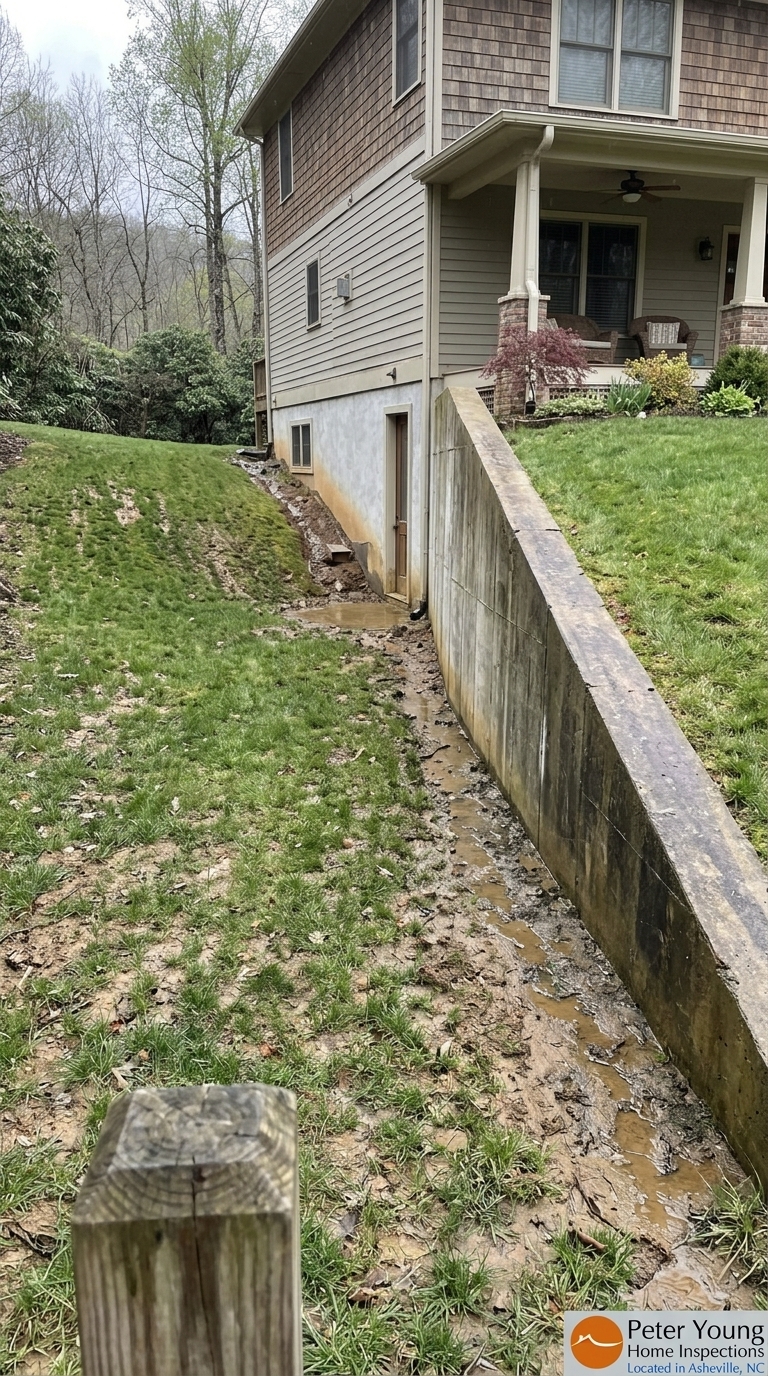
The most basic rule of residential engineering is ridiculously simple: water should flow away from the house.
Yet, you’d be amazed at how many properties feature what we call “negative grading”—where the ground slopes down toward the foundation.
Over time, soil settles, flower beds get built up with heavy mulch, and one day the house is sitting in a shallow earth bowl. This is very bad news for the foundation, because as “they” say, water always wins.
What to look for on your site visit:
- The Sponge Effect: Walk the perimeter right after a rainstorm (or look closely at dry soil). Is the earth squishy near the foundation? Are there moss or algae patches clinging to the lower brick course or siding?
- The Mulch Mountain: Check if previous owners kept adding fresh wood chips every spring until the soil line rose above the top of the foundation stem wall. That’s an open invitation for both water intrusion and hungry termites.
- Spout Short-Circuiting: Look at the downspouts. Are they dropping water six inches from the basement wall? If a downspout doesn’t extend at least four to six feet away from the perimeter, all that roof runoff is being funneled straight down into the footings.
2. Retaining Walls: The Unsung Heroes (Or Impending Disasters)
Retaining walls aren’t just decorative hardscaping to make a sloped yard look like a Pinterest board. They are structural soil-retaining devices holding back thousands of pounds of hydrostatic pressure.
When a retaining wall fails, it’s not just a landscaping headache—it can alter the grade around the home and undermine driveway aprons, patios, or the house foundation itself.
What to look for on your site visit:
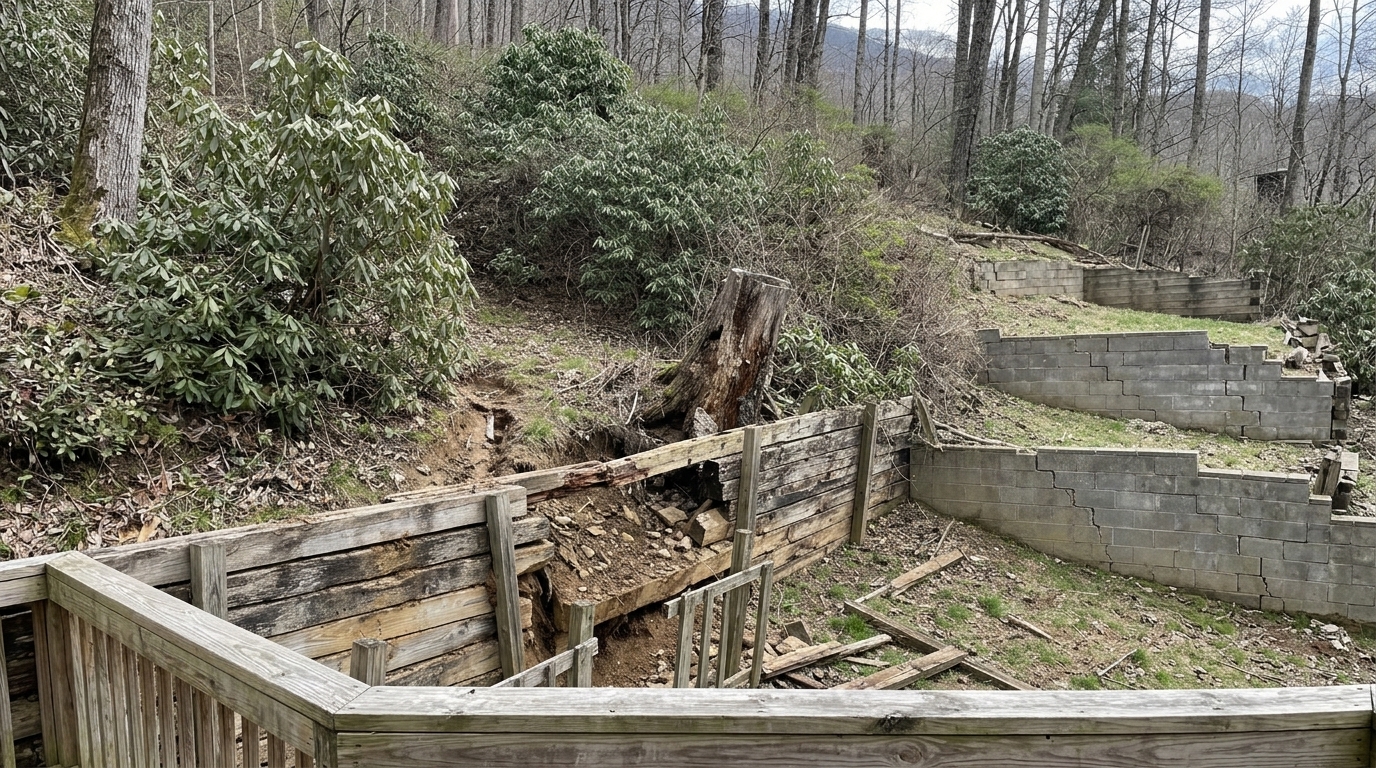
- The Leaning Tower of Landscape Timber: Old pressure-treated timber walls have a finite lifespan (usually 15 to 20 years). If you see crossties that look soft, rotting, or visibly bowing outward like a barrel, that wall is on borrowed time.
- Deadmen Walking: Proper timber and block walls use “deadmen” — structural anchors extending back into the bank to hold the wall upright. If a wall is leaning or showing steps opening up between blocks, those anchors have failed or were never installed.
- Missing Weepholes: Masonry or concrete block retaining walls need a way to relieve water pressure from behind them. Look along the base: are there weep holes or drainage pipes? If not, water trapped behind that wall during a hard freeze will push it right over.
3. Slope Stability & Erosion: Reading the Yard
If you’re showing a home built on a hillside or featuring a steeply terraced lot, slope stability becomes public enemy number one. Soil moves slowly, but once it starts sliding, stabilizing it requires deep pockets and heavy machinery.
What to look for on your site visit:
- J-Curved Tree Trunks: Look at the trees growing on a slope. If the base of a tree trunk curves out like the letter “J” before growing straight up, the top layer of soil on that hill is actively creeping downward over time.
- Exposed Roots and Channeling: Rills and deep gullies washed into the grass indicate unchecked surface runoff. If rain is carving miniature Grand Canyons through the backyard, it’s stripping away the topsoil that holds the slope together.
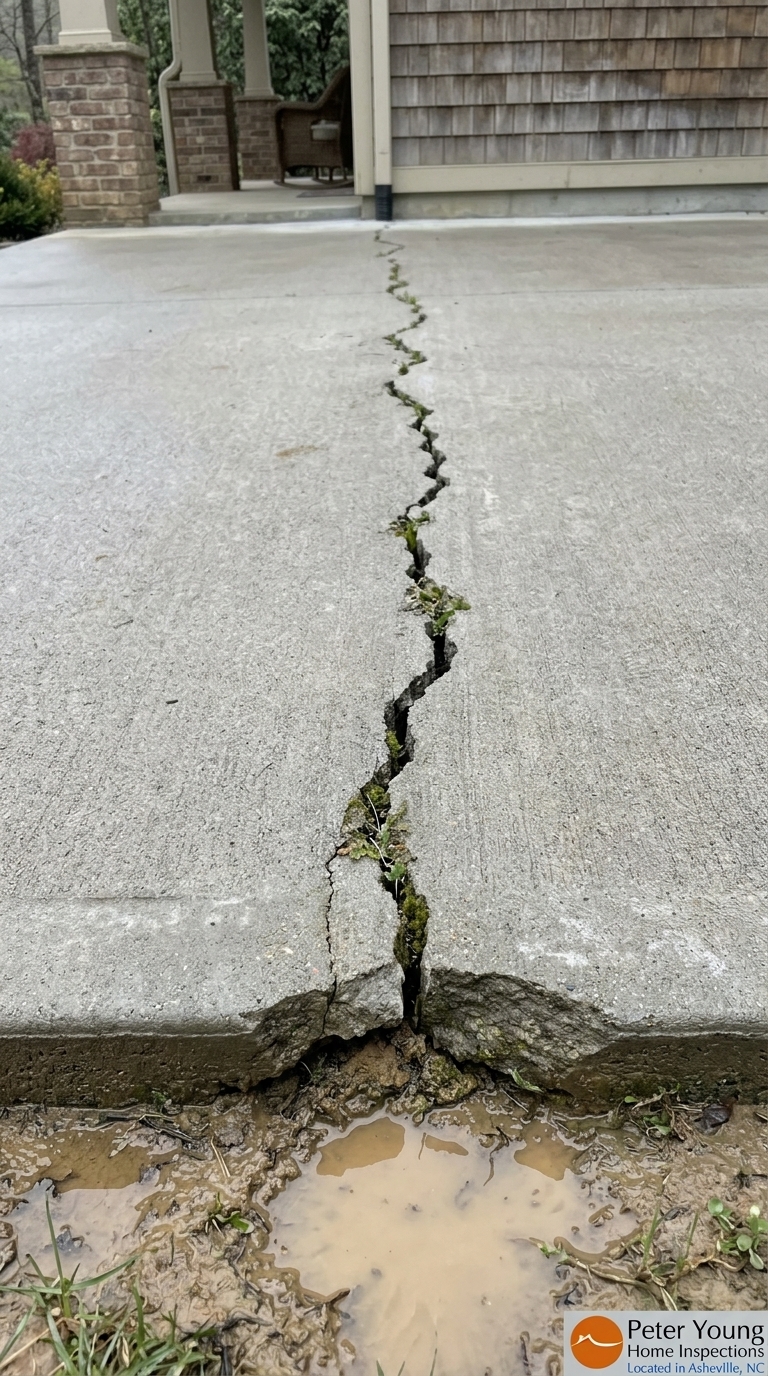
- Cracked Hardscape: Keep an eye out for horizontal cracks in concrete patios, leaning fence posts, or steps separating from the main structure on hillside builds.
How To Frame This With Your Clients
Spotting these red flags early doesn’t mean you have to scare your buyers away from a great property. Use your own discretion, but make your client understand that some problems are more expensive to fix than others. That crumbling retaining wall, for example.
Most drainage issues are straightforward to fix if caught before structural damage occurs.
When you notice a downspout dumping water at the foundation or a lawn sloping the wrong way, use it as a moment to demonstrate your expertise:
“Notice how the ground slopes back toward the back porch here? Before we close, we’ll want to make sure the inspector checks the basement walls for moisture, and you’ll probably want to budget a few hundred dollars to re-grade this flowerbed and extend those downspouts after closing.”
Click here for a handy Site Visit Checklist you can carry with you to impress potential buyers.
By spotting water management issues outside, you set realistic expectations, protect your client’s future equity, and ensure that when the home inspection report lands in your inbox, there are no surprise underwater basements waiting for you.
Buying or Selling a Home in Western NC?
Avoid unpleasant surprises! Contact Asheville Home Inspector Peter Young before signing any contracts. Call (828) 808-4980, or click here to make an appointment.
